Introduction
Berlin is a city defined by reinvention. Known worldwide for its vibrant techno clubs and art scene, it might not be the first place you think of for folk music. Yet beneath the city’s neon lights lies a thriving underground folk scene where tradition meets experimentation.
Folk in the City
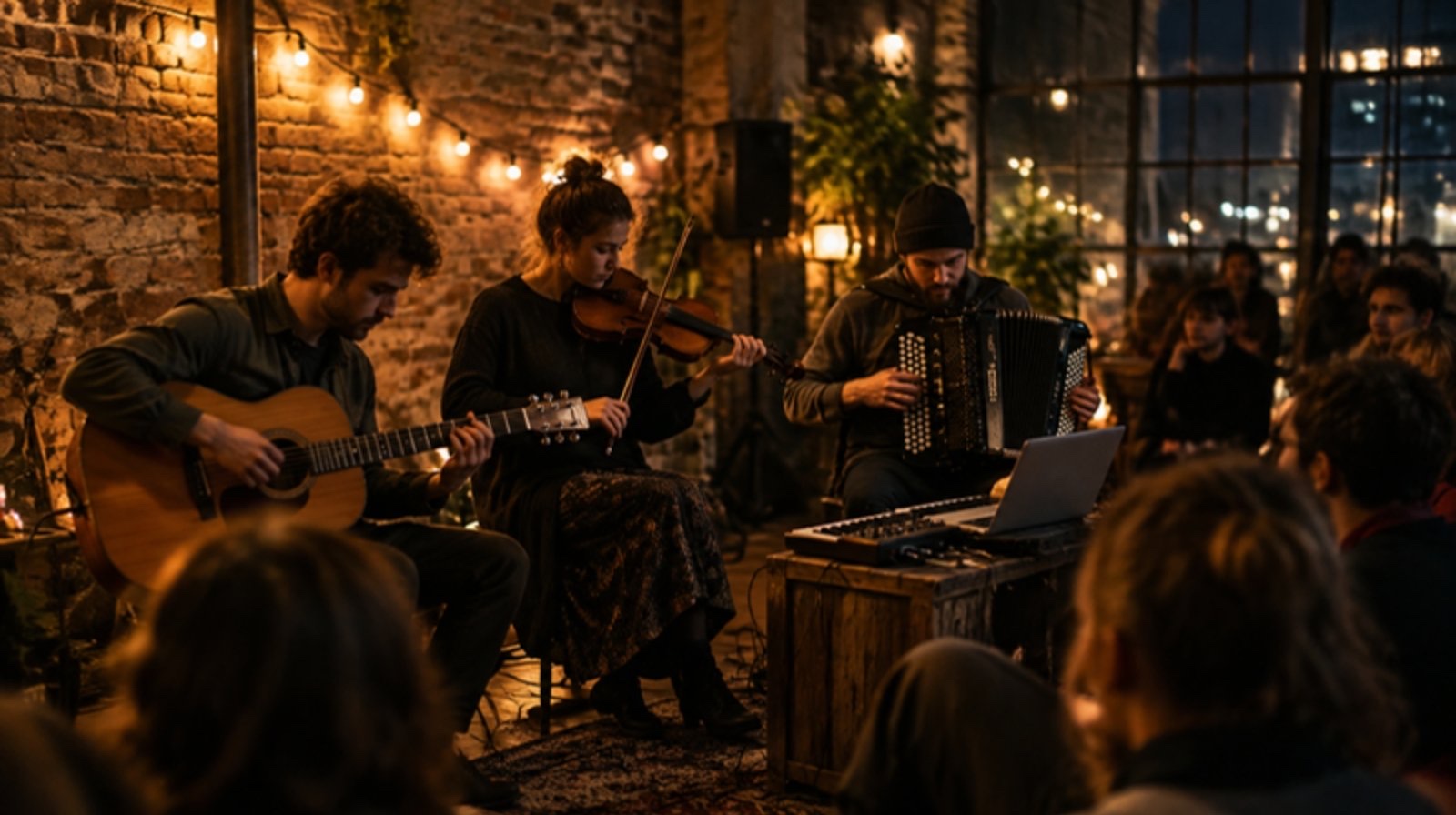
Berlin’s folk revival is not confined to nostalgic performances. Instead, it’s driven by collectives of young musicians who see folk as a canvas for storytelling. They host intimate sessions in bars, art spaces, and even abandoned factories, where old German ballads are given new life.
Blending Techno and Tradition
One of the most surprising developments is the fusion of folk and electronic music. DJs sample old folk recordings, layering them over deep basslines, while live performers play instruments like fiddles or zithers alongside synths. This hybrid sound has become a signature of Berlin’s cultural landscape.
Global Influences in Local Spaces
As a city of immigrants, Berlin’s folk scene doesn’t exist in isolation. Turkish saz, Balkan brass, and African percussion often mingle with German folk tunes, creating a global soundscape that reflects Berlin’s diversity. These collaborations show how folk traditions evolve when exposed to new cultural currents.
Spaces of Resistance and Identity
Berlin’s underground folk is more than music; it’s a way of reclaiming identity in a rapidly changing city. For many, singing in dialect or reviving old songs is an act of cultural preservation in the face of gentrification and globalization.
“In Berlin, folk music doesn’t live in the past — it thrives in the underground.”
Closing
Berlin proves that tradition and modernity are not opposites but partners. Its underground folk scene shows how music can adapt to the pulse of the city while holding onto its roots.
Explore the sounds of our Heimat Beats Berlin session, where techno meets tradition.